
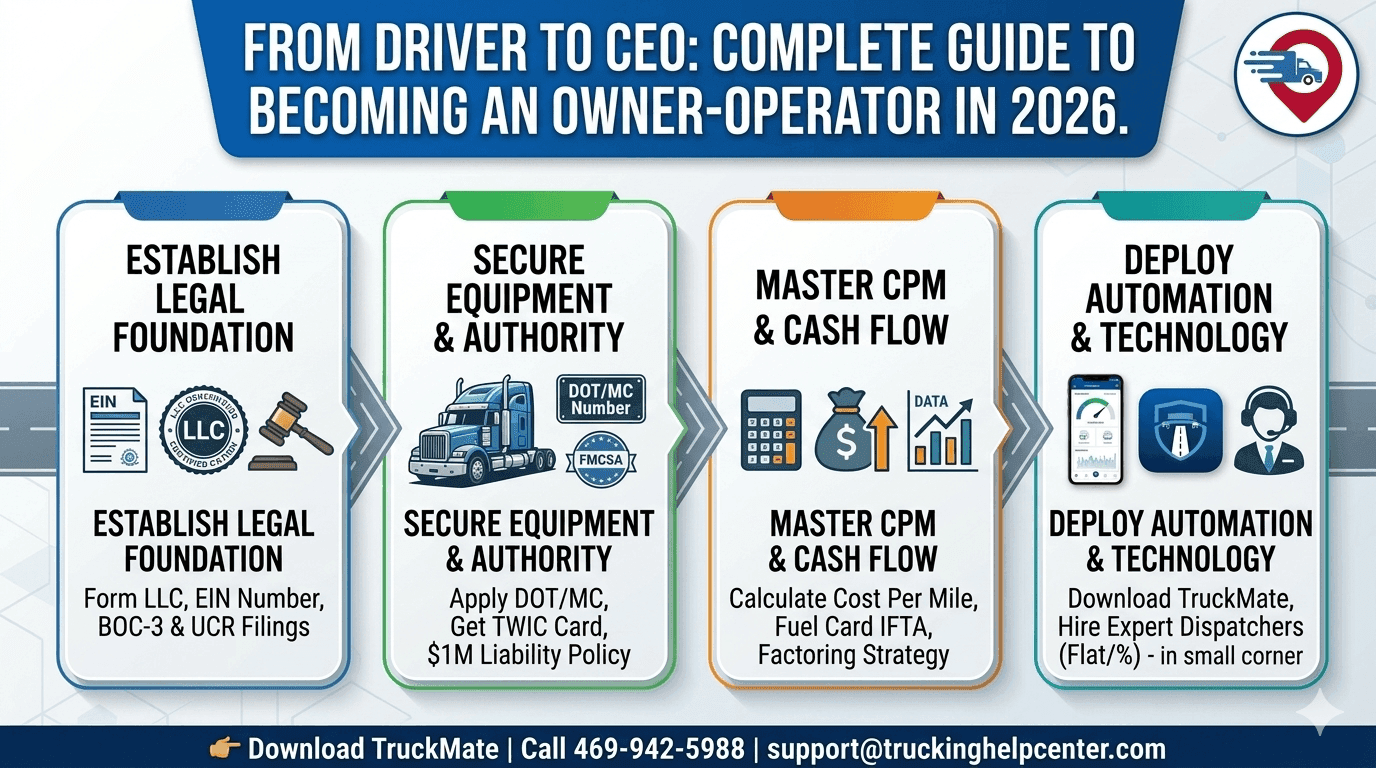
Getting your authority is the easy part. Staying in business through the first year is where most new owner-operators struggle. This guide is about running your trucking business profitably once you're set up. If you haven't started yet, begin with how to become an owner-operator.
1. Know Your Numbers Every Week
The owner-operators who last know three numbers without looking them up:
- Cost per mile (CPM): everything it costs to run the truck ÷ all miles, including deadhead.
- Break-even rate: the lowest rate per mile you can accept without losing money.
- Profit per mile: rate per mile minus cost per mile.
Work yours out with the free Cost Per Mile Calculator, and see the CPM guide. Update it monthly.
2. Build a Cash Cushion
Brokers often pay in 30 days or more, and a single repair can cost thousands. Before you rely on the truck for income:
- Keep several weeks of expenses in reserve.
- Set aside a maintenance fund every week, per mile driven.
- Set aside money for quarterly taxes and IFTA.
If cash flow is tight, compare broker quick pay and factoring, and read the full fee schedule before you sign.
3. Book Smarter, Not Just More
- Count deadhead. A high rate with long empty miles can pay less than a lower rate close by. See the deadhead cost guide.
- Plan the backhaul before you accept the outbound load.
- Know lane rates so you can negotiate. See what is a good rate per mile.
- Charge for your time. Ask for detention and layover pay in writing. Work out what you're owed with the detention pay calculator.
4. Protect Yourself From Bad Brokers
One unpaid load can wipe out a month's profit. Before every new broker:
- Check authority and bond with the free Broker Health Checker.
- Call the phone number on the FMCSA record.
- Get a signed rate confirmation.
- Read the BOL at pickup to spot double brokering.
5. Decide Who Books Your Loads
Booking loads while you drive is hard. Some owner-operators hire an independent dispatcher; others book their own and keep the fee. Compare the cost on your own numbers with the dispatch fee calculator, and read what a dispatcher does before you sign.
6. Stay on Top of Compliance
Missed deadlines bring fines, out-of-service orders or a revoked authority:
| Item | When |
|---|---|
| IFTA return | Quarterly (April 30, July 31, Oct 31, Jan 31) |
| UCR | Every year before January 1 |
| MCS-150 | Every two years |
| Form 2290 | Every year |
| Insurance, CDL, medical card | Before each expires |
Keep receipts and logs for audits. TruckMate, Trucking Help Center's free tool, scans rate confirmations and fuel receipts, keeps your IFTA fuel log and documents, and sends expiry alerts.
7. Take Care of the Truck
Breakdowns are expensive twice: the repair, and the loads you miss. Follow a preventive maintenance schedule, check tires and brakes often, and find a trusted shop on your lanes. The directory lists truck repair shops and mobile mechanics.
8. Treat It Like a Business
- Pay yourself a set amount and leave the rest in the business.
- Review your numbers monthly with a bookkeeper or accountant who knows trucking.
- Keep business and personal money separate.
Frequently Asked Questions
Why do new owner-operators fail? Usually cash flow: not knowing their cost per mile, taking loads below break-even, unplanned repairs and slow-paying brokers.
How much should I keep in reserve? Enough to cover several weeks of truck payments, insurance and fuel while you wait for brokers to pay.
Should I use a dispatcher? If it frees up time you'd use to drive more and the fee is covered by better rates, it can make sense. Compare the numbers first.
Get Matched With the Right Professional
Trucking Help Center provides no service itself. It connects you with independent professionals and partners listed on Trucking Help Center, such as accounting and bookkeeping professionals and independent dispatchers. They do the work and set their own fees. Asking is free.
- Get matched free: tell us what you need, and your request goes to professionals listed for it.
- Browse the directory: compare professionals yourself.
Questions about this guide? Email support@truckinghelpcenter.com.