
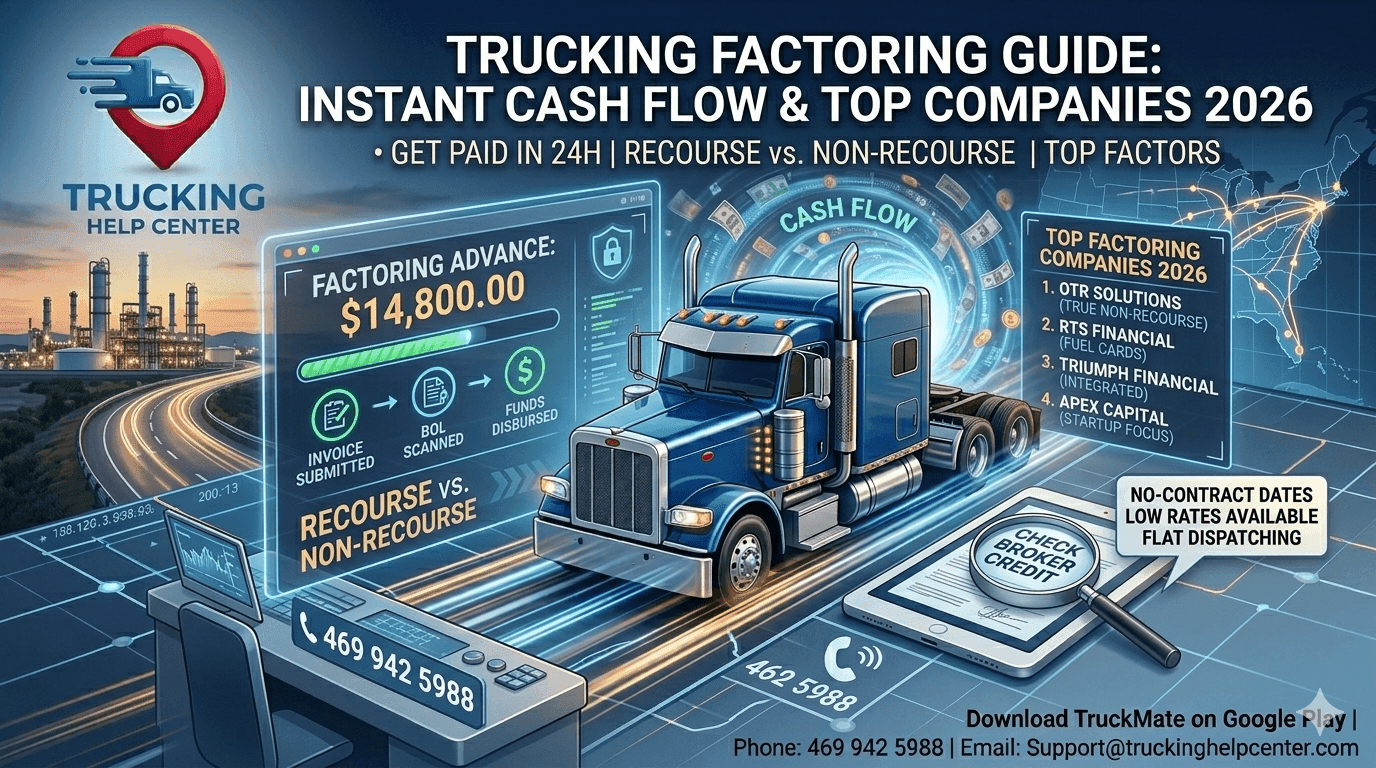
Freight factoring is when a trucking company sells its unpaid invoices to a factoring company to get paid now instead of waiting for the broker or shipper. The factoring company advances most of the invoice amount, usually within a day or two, then collects from your customer and keeps a fee.
Many small carriers use factoring because brokers often pay in 30 days or more, while fuel, insurance and truck payments are due now.
How Freight Factoring Works
- You deliver the load and get a signed bill of lading and proof of delivery.
- You send the invoice and paperwork to your factoring company.
- The factor advances most of the invoice to your bank account.
- The factor collects from the broker, who pays the factor instead of you (a "notice of assignment" tells the broker where to pay).
- You receive the rest of the invoice, minus the factoring fee, once the broker pays (for some contracts).
Recourse vs. Non-Recourse Factoring
| Recourse | Non-recourse | |
|---|---|---|
| If the broker doesn't pay | You must buy the invoice back or replace it | The factor takes the loss, but usually only if the broker goes insolvent, not for disputes |
| Fees | Usually lower | Usually higher |
| What to read | The buy-back deadline | The exact situations the factor covers |
"Non-recourse" rarely means "no risk." Read the definition in the contract.
What to Check Before You Sign a Factoring Contract
- The full fee, not just the headline rate: ask about ACH or wire fees, monthly minimums, invoice processing fees and credit check fees.
- Contract length and termination fees. Some contracts renew automatically.
- Whether you must factor all your invoices or can choose which ones.
- Reserves: how much is held back and when you get it.
- The UCC lien: most factors file a lien on your receivables. Ask how it's released when you leave.
- Broker credit checks: a good factor tells you before you haul whether a broker pays.
Factoring vs. Quick Pay
Many brokers offer quick pay: they pay you faster in exchange for a fee taken from that load. Quick pay works load by load with no contract; factoring covers all your brokers and adds credit checks and collections. See factoring vs. quick pay.
Factoring Requirements
Most factoring companies ask for:
- Active operating authority (what is an MC number?)
- A certificate of insurance naming the factor where needed (what is a COI?)
- Your EIN and business bank account (what is an EIN?)
- A signed factoring agreement and notice of assignment
New authorities can usually factor, because the factor relies mostly on your customers' credit, not yours.
Factoring Doesn't Replace Broker Checks
Factoring speeds up payment from good brokers; it doesn't make bad brokers pay. Check every broker first with the free Broker Health Checker, and read what to do if a broker doesn't pay.
Compare Factoring Companies
Trucking Help Center's factoring page compares factoring companies and explains what to ask before you sign.
Frequently Asked Questions
What is factoring in trucking? Selling your freight invoices to a factoring company so you get paid in days instead of waiting for the broker.
Is factoring a loan? It's usually structured as a sale of invoices, not a loan. Read your contract, because terms vary.
Can I stop factoring? Yes, but check the contract length, termination fee and lien release first.
Do I need factoring? Not always. If your cash flow can handle 30-day payment terms, you may not need it.
Get Matched With the Right Professional
Trucking Help Center provides no service itself. It connects you with independent professionals and partners listed on Trucking Help Center, such as factoring companies. They do the work and set their own fees. Asking is free.
- Get matched free: tell us what you need, and your request goes to professionals listed for it.
- Browse the directory: compare professionals yourself.
Questions about this guide? Email support@truckinghelpcenter.com.