
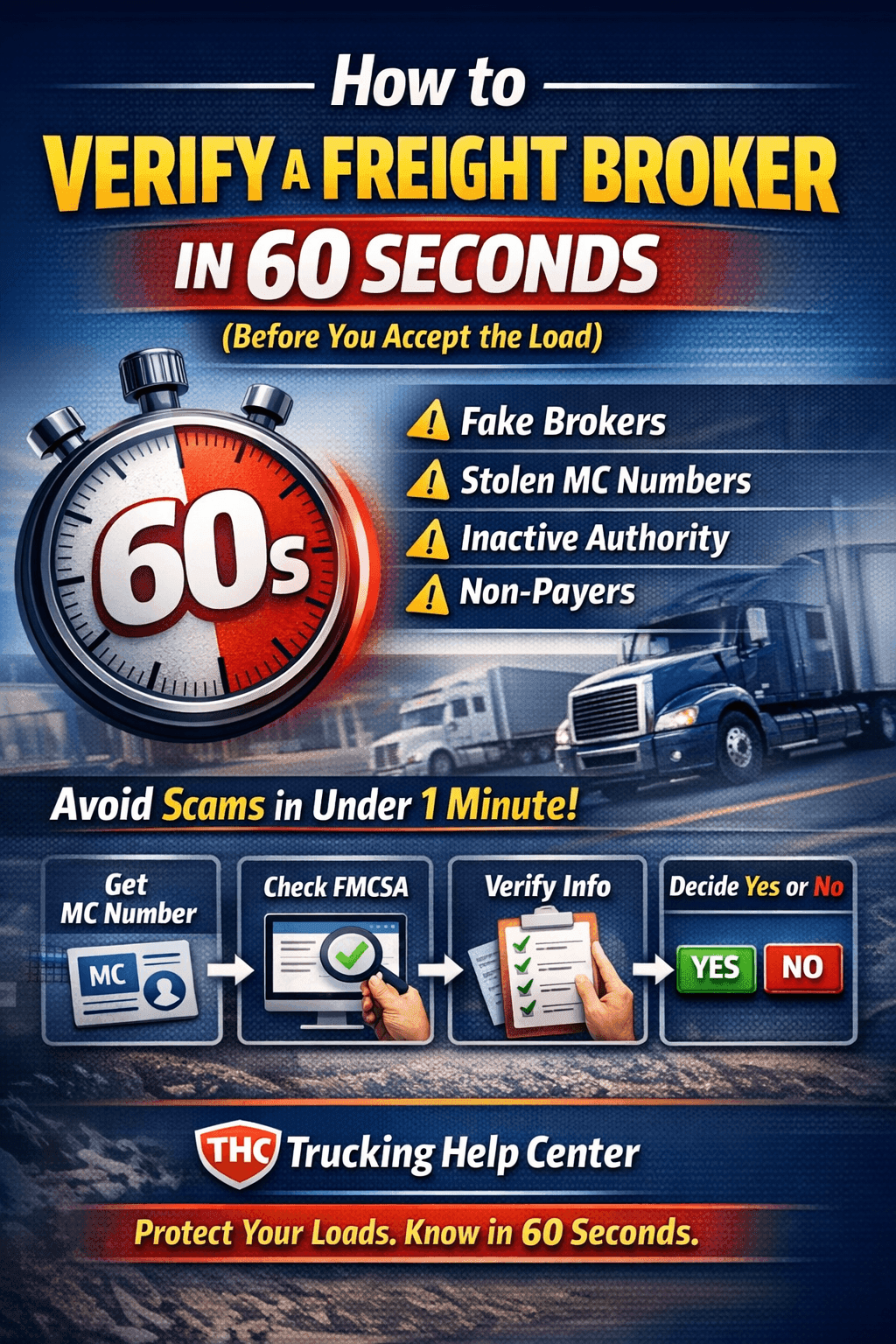
You can check whether a freight broker is legitimate in about a minute, for free, before you accept a load. You need the broker's MC or USDOT number, which should be on the load posting or rate confirmation. Then confirm four things: active broker authority, a $75,000 bond on file, contact details that match FMCSA, and no red flags.
Why Checking Every Broker Matters
One unpaid load can wipe out a month of profit. Common scams include:
- Double brokering: a company takes the load and passes it to you without the shipper knowing, then disappears with the money. See double brokering explained.
- Fake brokers using real MC numbers: scammers copy a real broker's name and MC number and email you from a look-alike address.
- Brokering without broker authority: carrier authority lets a company haul, not broker freight.
- Payment redirection: an email asks you to send your invoice, or a payment, somewhere new.
The 60-Second Broker Check
1. Get the MC or USDOT number
It should be on the rate confirmation and match the company name.
2. Look it up
Enter it in the free Broker Health Checker. You'll see the broker's FMCSA authority, bond status and red flags instantly, with no signup.
3. Confirm active broker authority
The broker needs active broker authority. If the company only has carrier authority, it isn't allowed to broker your load.
4. Confirm the $75,000 bond
Every licensed broker must have a $75,000 surety bond (BMC-84) or trust fund (BMC-85) on file. Since January 16, 2026, FMCSA suspends brokers whose bond falls below $75,000 and isn't restored within seven business days. No bond, or a cancellation pending, means don't haul.
5. Call the number on the FMCSA record
Don't use the number in the email or load posting. Call the phone number FMCSA has on file and confirm the person and the load are real.
6. Check the email address
Large brokers use their company domain. Look-alike domains (an extra letter, a different ending) and free email accounts are warning signs.
Red Flags: Don't Haul If You See These
- No active broker authority, or the company is not allowed to operate
- No bond on file, or a bond cancellation pending
- An out-of-service order
- A rate far above the lane, with pressure to load immediately
- A different company name on the bill of lading than on your rate confirmation
- A request to change where you send invoices or receive payment
Also Check Payment History
Authority and a bond prove a broker is licensed, not that it pays on time. Before a first load, ask your factoring company for a credit approval, or check days-to-pay data on your load board. A broker can be licensed and still slow to pay.
Keep the Paper Trail
- Sign the rate confirmation before you dispatch.
- Keep the rate confirmation, BOL and proof of delivery until you're paid.
- Invoice the same day you deliver.
If a broker still doesn't pay, follow what to do when a broker doesn't pay and how to file a broker bond claim.
Check Brokers on the Go
TruckMate, Trucking Help Center's free tool, includes a broker vetting scanner that checks FMCSA status, authority, insurance on file, safety rating and out-of-service orders from your phone.
Frequently Asked Questions
How do I know if a freight broker is legit? Confirm active broker authority, a $75,000 bond on file, and contact details that match FMCSA. Then check payment history with your factor.
Is MC number lookup free? Yes. The Broker Health Checker and the Carrier & Broker Lookup are free with no signup.
What if the broker's authority is new? New authority alone isn't a scam sign, but combine it with the other checks and ask for credit approval before you haul.
Get Matched With the Right Professional
Trucking Help Center provides no service itself. It connects you with independent professionals and partners listed on Trucking Help Center, such as factoring companies that run broker credit checks. They do the work and set their own fees. Asking is free.
- Get matched free: tell us what you need, and your request goes to professionals listed for it.
- Browse the directory: compare professionals yourself.
Questions about this guide? Email support@truckinghelpcenter.com.