
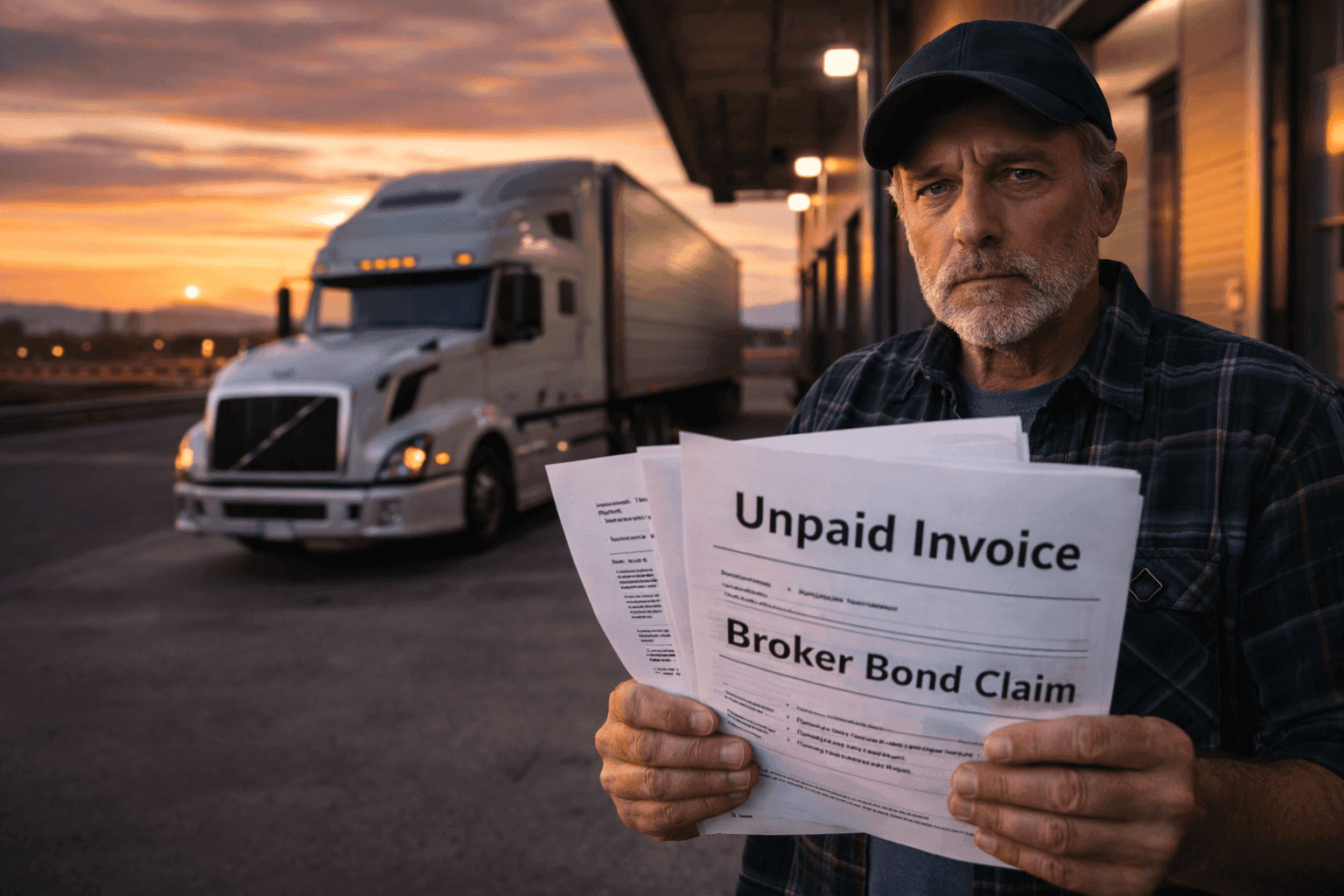
Every licensed freight broker must keep a $75,000 surety bond (Form BMC-84) or trust fund (BMC-85) on file with FMCSA. If a broker doesn't pay you for a load you hauled, you can file a claim against that bond. This guide shows how, step by step.
How a Broker Bond Works
The bond is a promise from a surety company (an insurance-type company) that it will pay valid claims if the broker fails to meet its obligations, up to $75,000 in total. That $75,000 is shared by everyone who files, so if a broker fails while owing many carriers, the money can run out fast.
Since January 16, 2026, FMCSA's broker financial responsibility rule is fully in effect. The surety must notify FMCSA within two business days if the bond falls below $75,000, and FMCSA suspends the broker's authority if the bond isn't restored within seven business days. That protects carriers going forward, but it also means you should file early.
Step 1: Gather Your Documents
You'll need:
- The signed rate confirmation
- The bill of lading and proof of delivery (POD), signed by the receiver
- Your invoice, with the date you sent it
- Emails, texts and call notes showing you asked for payment
Missing signatures and mismatched documents are a common reason claims are denied, so make sure everything matches.
Step 2: Find the Broker's Surety Company
Look the broker up in the free Broker Health Checker or on FMCSA's public licensing and insurance records. The record lists the bond or trust, the surety or trustee name and the bond number.
Step 3: Send a Final Written Demand
Send the broker a written demand for payment that states the amount, the load, the invoice date and a short deadline, for example 72 hours. Keep a copy. Many brokers pay at this stage.
Step 4: File the Bond Claim
Contact the surety company and ask for its claim form. Send:
- The completed claim form
- All the documents from Step 1
- A copy of your demand letter
Ask the surety to confirm it received your claim, and write down the claim number.
Step 5: Wait for the Investigation
The surety contacts the broker and gives it a chance to dispute or pay. If the claim is valid and the broker doesn't resolve it, the surety pays from the bond, subject to how much is left and how many other claims are filed.
Other Ways to Get Paid
- Your factoring company, if you factored the invoice, may pursue the broker for you.
- Small claims court or a collection agency for amounts the bond doesn't cover.
- A complaint to FMCSA through the National Consumer Complaint Database.
Common Mistakes to Avoid
- Waiting too long. If the broker is failing, other claims can use up the bond.
- Incomplete paperwork. A missing signature on a BOL is a common reason claims are denied.
- Accepting a partial payment without reading what you're agreeing to. It can complicate a claim for the full balance.
Prevent It Next Time
Check every broker before you haul: active authority, bond on file, and contact details that match FMCSA. Our guides on how to vet a freight broker and what to do when a broker doesn't pay cover the full process.
Frequently Asked Questions
How much is a freight broker bond? $75,000, through a BMC-84 surety bond or BMC-85 trust.
Can I file a bond claim myself? Yes. You don't need a lawyer to file, though some carriers use one for large amounts.
What if the bond is already used up? You can still pursue the broker directly through collections or the courts.
Get Matched With the Right Professional
Trucking Help Center provides no service itself. It connects you with independent professionals and partners listed on Trucking Help Center, such as professionals who help carriers recover unpaid freight bills. They do the work and set their own fees. Asking is free.
- Get matched free: tell us what you need, and your request goes to professionals listed for it.
- Browse the directory: compare professionals yourself.
Questions about this guide? Email support@truckinghelpcenter.com.