
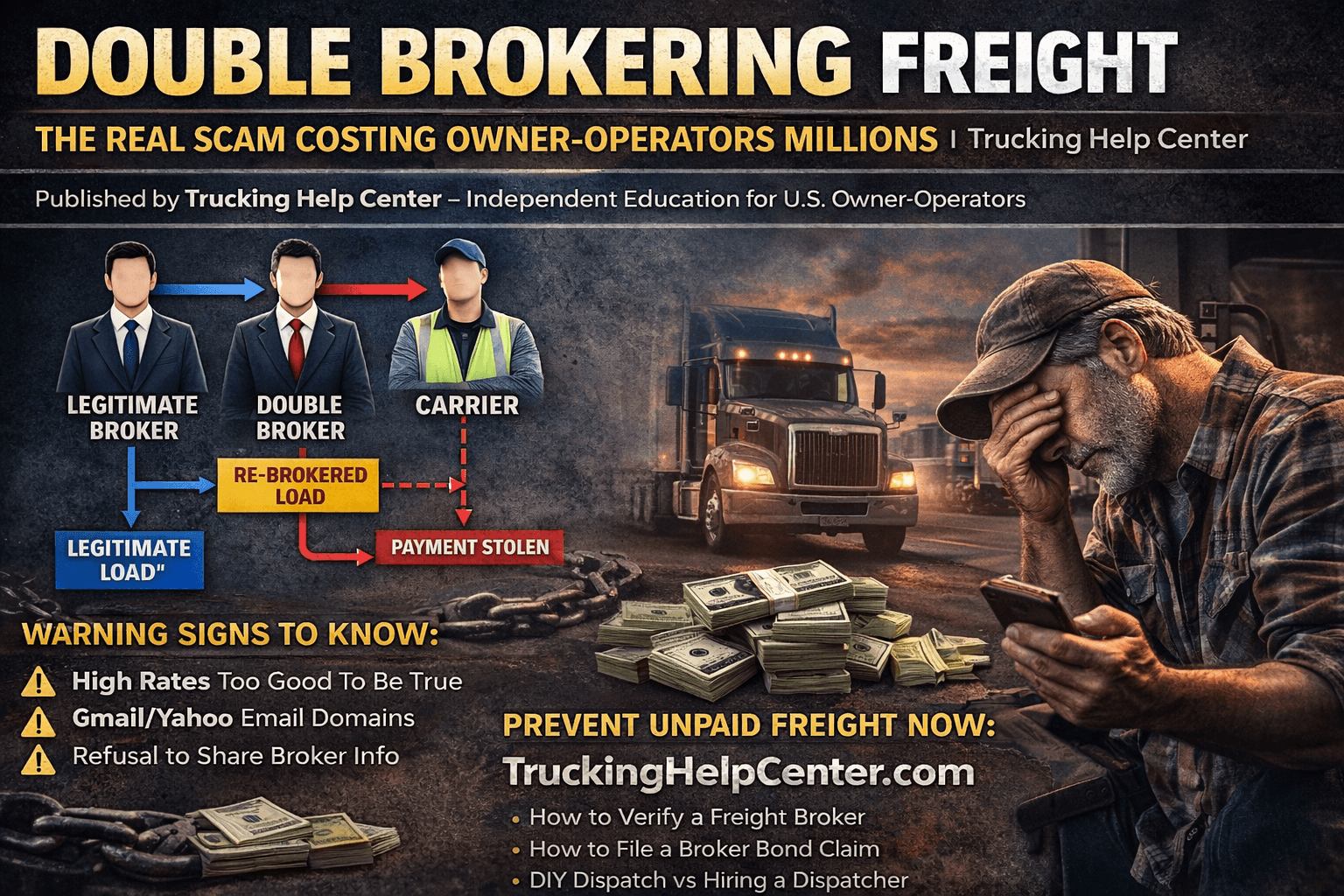
Double Brokering Freight: The Real Scam Costing Owner-Operators Millions (Trucking Help Center)
Published by Trucking Help Center – Independent Education for U.S. Owner-Operators
Double brokering freight is not a rumor, not an exaggeration, and not a rare mistake. It is one of the most damaging and fast-growing fraud schemes in U.S. trucking, and it disproportionately hurts owner-operators and small carriers.
This guide is written for drivers — not brokers, not shippers, and not industry lobbyists. If you haul freight in the United States, this is information you cannot afford to ignore.
What Is Double Brokering Freight?
Double brokering freight happens when a broker accepts a load from a shipper and then reassigns it to another carrier or broker without authorization. The second carrier hauls the freight, but payment is delayed, disputed, or never made.
In many cases, the carrier only discovers the problem after delivery, when invoices are ignored or the shipper claims they already paid someone else.
This is not:
- Co-brokering with written shipper consent
- Load transfers approved in advance
This is deception, and it is costing drivers real money.
Is Double Brokering Freight Illegal?
In most real-world cases, yes.
Under 49 CFR §371, freight brokers must:
- Operate only under their granted authority
- Maintain transaction transparency
- Disclose records upon request
When a broker reassigns a load without shipper permission, they may violate:
- Federal broker regulations
- Contract law
- Fraud and misrepresentation statutes
FMCSA has acknowledged increased complaints tied to double brokering and freight fraud.
🔗 Authority reference: https://www.fmcsa.dot.gov/registration
How Double Brokering Freight Scams Actually Work
The pattern is repeatable and predictable:
- A broker (often newly registered or using stolen authority) posts above-market rates
- A carrier accepts under time pressure
- The load is quietly reassigned
- Paperwork is altered or forged
- Freight is delivered
- Payment stalls or disappears
By the time the carrier realizes what happened:
- The broker entity is gone
- The bond is maxed out or fake
- Recovery options are limited
This is why freight fraud spikes during soft markets — scammers exploit desperation and speed.
Warning Signs Every Owner-Operator Should Know
If you see two or more of these, walk away:
- Rates significantly above market
- Free email domains or mismatched company domains
- Refusal to provide a complete carrier packet
- Pressure to accept immediately
- Last-minute changes to rate confirmations
Most victims admit later they felt something was wrong — and ignored it.
What To Do If You’re a Victim of Double Brokering
Time is critical.
Step 1: Preserve Evidence
- Rate confirmations
- Emails and texts
- Call logs
- BOLs
Step 2: Contact the Shipper
Confirm who they contracted and who they paid.
Step 3: File an FMCSA Complaint
Step 4: Notify the Broker Bond Provider
This may be your only recovery path.
Step 5: Document and Warn Others
Fraud survives in silence.
👉 Related THC guide: How to File a Broker Bond Claim
How Owner-Operators Can Prevent Double Brokering
Prevention is cheaper than recovery.
What actually works:
- Verify broker authority before every load
- Review payment history and complaints
- Confirm rate confirmations match dispatch instructions
- Avoid brokers who refuse transparency
👉 Related THC guide: How to Verify a Freight Broker Before Accepting a Load
One skipped check can cost weeks of revenue.
Why Double Brokering Is Getting Worse — Not Better
Let’s be blunt:
- Enforcement is slow
- Fraudsters move fast
- New carriers enter the market daily
- Education is lacking
Until owner-operators treat broker vetting as mandatory business practice, this problem will continue.
Dispatch Decisions and Double Brokering Risk
Many double-brokering victims were:
- Rushed
- Handling dispatch themselves
- Focused on rate instead of verification
👉 Related THC guide: DIY Dispatch vs Hiring a Dispatcher: What Actually Makes More Money
Poor dispatch systems increase fraud exposure.
Trucking Help Center’s Position
Double brokering freight is preventable theft, not an unavoidable industry risk.
Drivers deserve:
- Clear education
- Transparent tools
- Independent guidance
That is why this guide — and every resource on Trucking Help Center — exists.
Related Trucking Help Center Guides
- How to Verify a Freight Broker Before Accepting a Load [https://truckinghelpcenter.com/resources/how-to-verify-a-freight-broker-in-60-seconds-before-you-accept-the-load]
- How to File a Broker Bond Claim [https://truckinghelpcenter.com/resources/trucking-help-center-how-to-file-a-broker-bond-claim-in-2026-step-by-step-guide-to-recovering-your-money-1]
- DIY Dispatch vs Hiring a Dispatcher [https://truckinghelpcenter.com/resources/diy-dispatch-vs-hiring-a-dispatcher-what-actually-makes-more-money]
- Cost Per Mile: How Owner-Operators Actually Calculate Profit [https://truckinghelpcenter.com/resources/how-to-calculate-your-true-cost-per-mile-in-2026-stop-losing-money-on-every-load]
Education protects income. Verification protects survival.
Disclaimer: This guide provides general information based on current market conditions. Individual circumstances vary. Always consult with your accountant, attorney, or business advisor for decisions affecting your operation. Market rates fluctuate—verify current data before negotiating.
Published by Trucking Help Center (THC)
Empowering owner-operators with real information from real drivers.